
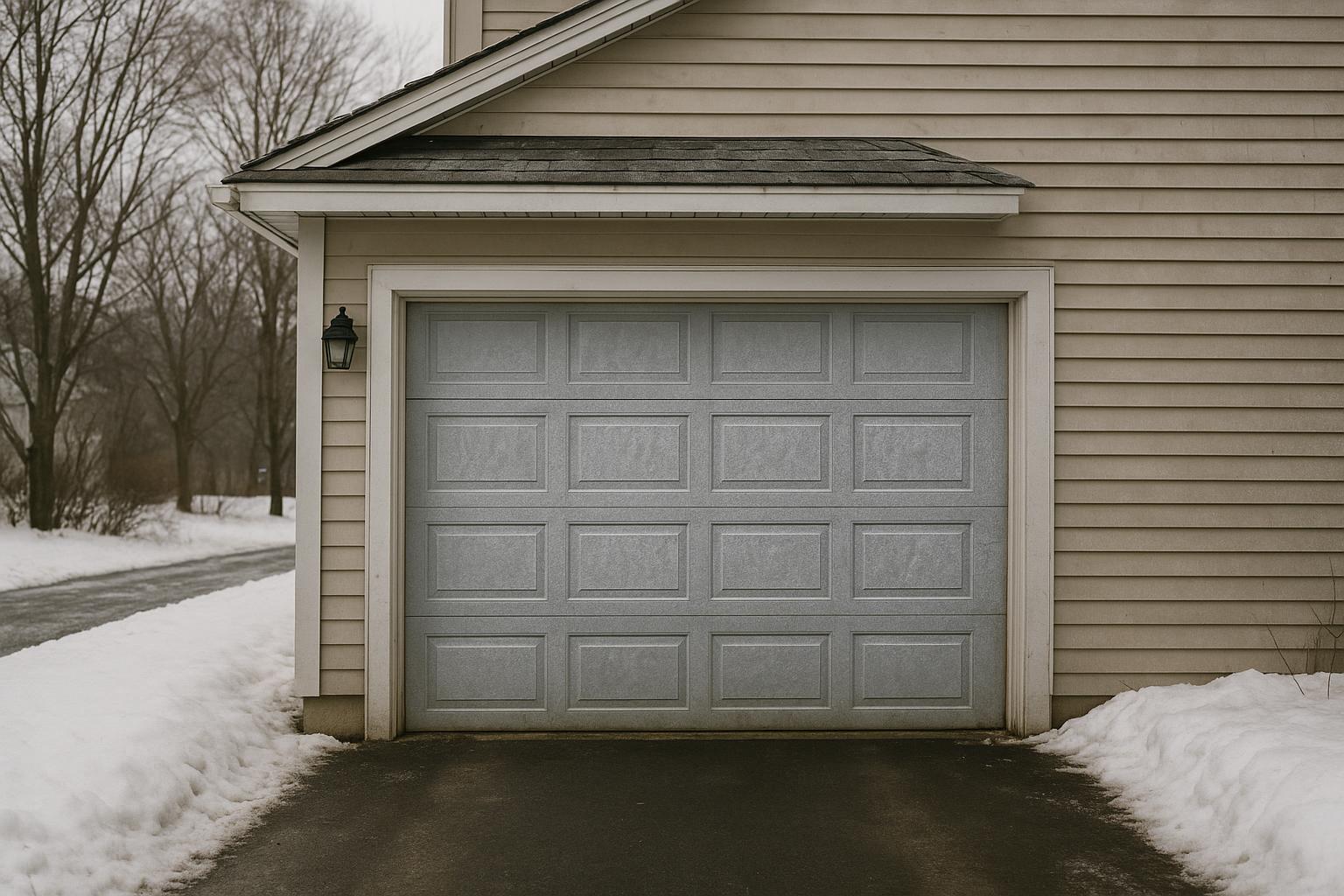
Winter Takes a Toll on Garage Doors in the Capital Region
If you've lived in Schenectady for even one winter, you know the cold doesn't mess around. Temperatures regularly dip into the single digits, ice storms roll through, and snow piles up fast. While most homeowners think about their furnace, pipes, and roof during the cold months, there's one part of the house that often gets overlooked — the garage door.
Your garage door is the largest moving part of your home, and it's directly exposed to the elements. Cold weather can affect nearly every component, from the springs and tracks to the opener and weatherstripping. Understanding how winter impacts your garage door can help you avoid breakdowns on the coldest mornings — exactly when you need your door to work the most.
Garage Door Springs Get Brittle in the Cold
This is the number one winter garage door issue we see across Schenectady, Niskayuna, and Rotterdam. Torsion and extension springs are made of metal, and metal contracts when temperatures drop. That contraction increases the tension on the springs and makes them more brittle.
A spring that was already nearing the end of its lifespan might snap on a frigid January morning without warning. When a spring breaks, your garage door becomes extremely heavy and nearly impossible to open — whether you're using an opener or trying to lift it manually.
What you can do:
- Have your springs inspected before winter arrives. A technician can tell you how much life they have left.
- Listen for unusual sounds. Squealing, popping, or grinding when the door moves can signal a spring under stress.
- Never try to replace a garage door spring yourself. These components are under extreme tension and can cause serious injury.
Your Garage Door Opener Struggles in Extreme Cold
Garage door openers are mechanical and electrical devices, and both aspects are affected by cold weather. The lubricant inside the motor can thicken, making it harder for the opener to do its job. Electrical components can also behave unpredictably when temperatures drop well below freezing.
You might notice your opener running slower than usual, straining to lift the door, or failing to fully open or close it. In some cases, the opener may stop working entirely until temperatures warm up.
What you can do:
- Make sure your opener is rated for cold-weather use. Older models may not handle temperature extremes as well as newer ones.
- If your opener is in an unheated garage, consider a model designed for harsh climates.
- Keep the opener's rail and chain or belt properly lubricated with a cold-weather-rated lubricant.
Metal Tracks Contract and Misalign
The metal tracks that guide your garage door up and down can contract in cold weather, just like the springs. When tracks shift even slightly, the door can bind, stick, or go off track entirely. You might hear scraping sounds or notice the door moving unevenly — one side higher than the other.
Ice can also form inside the tracks, especially if moisture gets in during a freeze-thaw cycle. Even a small amount of ice buildup can prevent the rollers from moving smoothly.
What you can do:
- Visually inspect your tracks for gaps, bends, or ice buildup throughout the winter.
- Wipe down the inside of the tracks periodically to remove moisture before it freezes.
- If the door goes off track, stop using it immediately and call a professional. Forcing it can cause further damage.
Weatherstripping Cracks and Fails
The rubber weatherstripping along the bottom and sides of your garage door is your first line of defense against cold air, snow, and water. Over time — and especially in the harsh winters we get here in the Capital Region — that rubber dries out, cracks, and loses its seal.
When weatherstripping fails, cold air pours into your garage. If your garage is attached to your home, that means higher heating bills and uncomfortable drafts inside the house. Damaged weatherstripping also lets in water, which can freeze on your garage floor and create a slipping hazard.
What you can do:
- Check your weatherstripping at the start of each winter season. Look for visible cracks, gaps, or sections that have pulled away from the door.
- Replace worn weatherstripping promptly. It's one of the most affordable garage door repairs and makes a noticeable difference in comfort and energy efficiency.
- Consider upgrading to a thicker, more insulated weatherstrip if your current one is thin or basic.
The Garage Door Can Freeze to the Ground
This is a classic Schenectady winter problem. After a night of freezing rain or a heavy snowfall followed by a deep freeze, the bottom of your garage door can literally freeze to the ground. When you hit the opener button, the motor strains against a door that won't budge, which can burn out the opener, snap cables, or damage the bottom panel.
What you can do:
- Before hitting the opener button on a cold morning, check whether the door is frozen to the ground.
- If it is, use a heat gun or pour warm (not boiling) water along the bottom seal to gently melt the ice.
- Keep the area where the door meets the ground clear of snow and standing water to prevent freezing.
- Applying a silicone-based lubricant to the bottom seal can help prevent it from bonding to ice.
Insulation Matters More Than You Think
An uninsulated garage door does almost nothing to keep cold air out. If you use your garage as a workshop, store temperature-sensitive items, or simply want to reduce heat loss from your home, upgrading to an insulated garage door can be a smart investment.
Insulated doors also tend to be quieter and more durable than single-layer steel doors. Many homeowners in Glenville, Colonie, and Scotia have upgraded to insulated models and noticed an immediate difference in garage temperature and energy costs.
Schedule a Winter Maintenance Check
The best way to avoid a cold-weather garage door emergency is to stay ahead of it. A professional maintenance visit before or during winter can catch worn springs, failing weatherstripping, misaligned tracks, and opener issues before they leave you stranded in the cold.
At Schenectady Garage Door Pro, we help homeowners throughout Schenectady and the surrounding communities keep their garage doors running reliably all winter long. Whether you need a quick repair, a spring replacement, or a full maintenance tune-up, we show up on time and get the job done right — even when the temperature says otherwise.
If your garage door is acting up this winter, don't wait for it to fail completely. Give us a call and let's make sure your door is ready for whatever this season throws at it.