
Your Garage Door Springs Are Doing More Work Than You Think
Every time you open and close your garage door, the springs are doing the heavy lifting — literally. A standard two-car garage door can weigh between 150 and 250 pounds, and without properly functioning springs, your opener alone can't handle that load. Springs counterbalance the weight of the door, making it possible to raise and lower it smoothly dozens of times a week.
For homeowners in Schenectady and the surrounding area, garage door springs are one of those components that work quietly in the background until they don't. And when they fail, it's usually sudden, loud, and inconvenient. The good news is that spring failure doesn't have to catch you off guard. Understanding the lifespan of your springs and recognizing the warning signs can save you from getting stuck with a door that won't budge on a freezing Monday morning.
How Long Do Garage Door Springs Typically Last?
Most standard garage door springs are rated for approximately 10,000 cycles. One cycle equals one full open and one full close. That might sound like a lot, but consider how often you use your garage door:
- If you open and close it twice a day (once to leave, once to come home), that's about 730 cycles per year.
- At that rate, your springs could last roughly 13 to 14 years.
- If you use the garage door more frequently — for example, if multiple family members come and go throughout the day — that number drops significantly. Four cycles a day brings the lifespan down to about 7 years.
There are also high-cycle springs available, rated for 25,000 or even 50,000 cycles. These cost more upfront but can be a smart investment if your garage door sees heavy daily use. When we do spring replacements here at Schenectady Garage Door Pro, we always discuss your usage patterns so we can recommend the right spring for your situation.
Torsion Springs vs. Extension Springs
There are two main types of garage door springs, and it helps to know which kind your door uses:
Torsion Springs
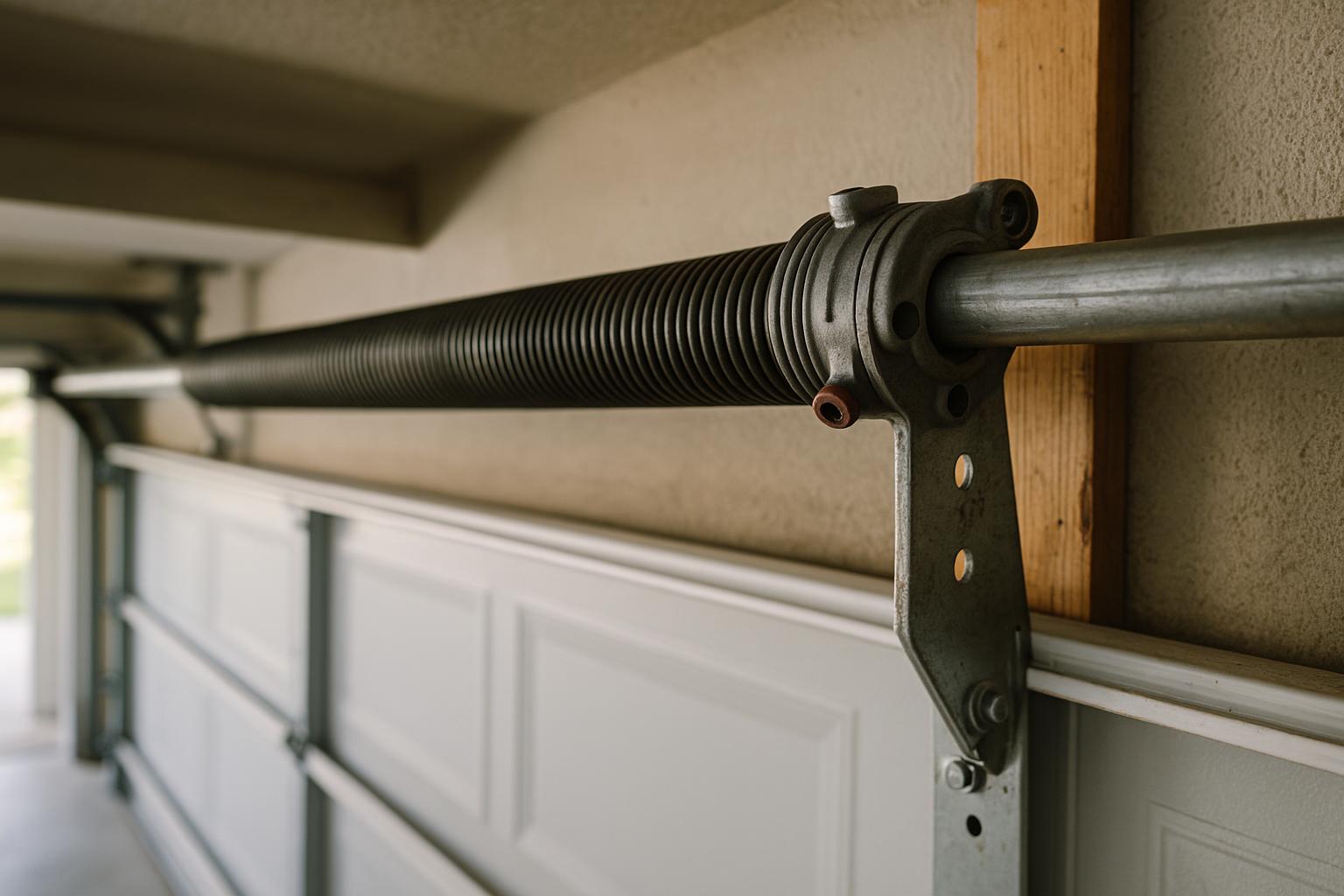
These are mounted on a metal shaft above the garage door opening. They use torque to lift the door and are the more common type on modern residential doors. Torsion springs tend to last longer, offer smoother operation, and are generally considered safer.
Extension Springs
These run along the horizontal tracks on both sides of the door. They stretch and contract as the door moves. Extension springs are more common on older homes and lighter single-car doors. They're typically less expensive but wear out faster and can be more dangerous when they break if they don't have safety cables installed.
If you're not sure which type you have, take a look above your garage door from inside. A single or pair of tightly wound coils on a bar above the door means you have torsion springs. Long springs running parallel to the tracks on either side are extension springs.
Warning Signs Your Garage Door Springs Are Wearing Out
Springs rarely fail without giving some advance notice. Here's what to watch for:
- The door feels heavier than usual. If you disconnect the opener and try to lift the door manually, it should move with relatively little effort. If it feels like you're deadlifting it, the springs are losing tension.
- The door doesn't stay open. A properly balanced door should stay in place when you lift it halfway and let go. If it slides down, the springs aren't holding their share of the weight.
- You hear loud creaking or popping sounds. Some noise is normal, but increasing squeaks, groans, or snapping sounds during operation can indicate spring fatigue.
- The door opens unevenly. If one side rises faster than the other, one spring may be weaker or close to failure — especially on doors with extension springs.
- Visible gaps in the coils. On torsion springs, look for a visible gap or separation in the coils. This is a clear sign the spring has already broken.
- Your opener is straining. If the motor sounds like it's working harder than usual or the door opens more slowly, worn springs could be forcing the opener to compensate.
Can You Replace Garage Door Springs Yourself?
This is one of the most common questions we get, and our answer is always the same: we strongly recommend against it. Garage door springs are under extreme tension. A torsion spring that snaps or is improperly handled during replacement can cause serious injury. Every year, emergency rooms across the country treat people who attempted DIY spring replacement.
Professional technicians have the tools, training, and experience to replace springs safely and efficiently. At Schenectady Garage Door Pro, a typical spring replacement takes about an hour, and we make sure the door is properly balanced and tested before we leave.
Should You Replace Both Springs at the Same Time?
If your door uses two torsion springs or two extension springs and only one has broken, we almost always recommend replacing both at the same time. Here's why:
- They've aged together. If one spring has reached the end of its life, the other one is likely not far behind.
- Balanced performance. New springs on both sides ensure even tension and smoother door operation.
- Cost savings. The labor involved in replacing one spring versus two is nearly the same. Doing both at once saves you from paying for a second service call in a few months.
Keeping Your Springs in Good Shape
While springs will eventually wear out no matter what, regular maintenance can help them reach their full lifespan. A few simple steps go a long way:
- Lubricate the springs two to three times a year with a garage door-specific lubricant or white lithium grease. This reduces friction and prevents rust — especially important in Schenectady where humidity and temperature swings can accelerate corrosion.
- Schedule annual maintenance. A professional tune-up includes inspecting the springs, checking door balance, tightening hardware, and lubricating all moving parts. Think of it like an oil change for your garage door.
- Don't ignore small problems. A door that's slightly off-balance or making new noises is telling you something. Catching spring issues early can prevent a sudden failure and the inconvenience that comes with it.
When It's Time, We're Here to Help
If your garage door springs are showing signs of wear — or if one has already snapped — don't wait for the problem to get worse. A broken spring puts extra stress on your opener, your cables, and the door itself, which can lead to more expensive repairs down the line.
Schenectady Garage Door Pro serves homeowners throughout Schenectady, Niskayuna, Rotterdam, Scotia, Glenville, and Colonie. We carry a range of spring types and sizes on our trucks so most replacements can be completed in a single visit. We'll explain exactly what's going on, give you an honest quote, and get your door working safely again.
Have questions about your garage door springs or want to schedule an inspection? Give us a call. We're always happy to help our neighbors keep their garage doors running smoothly.