
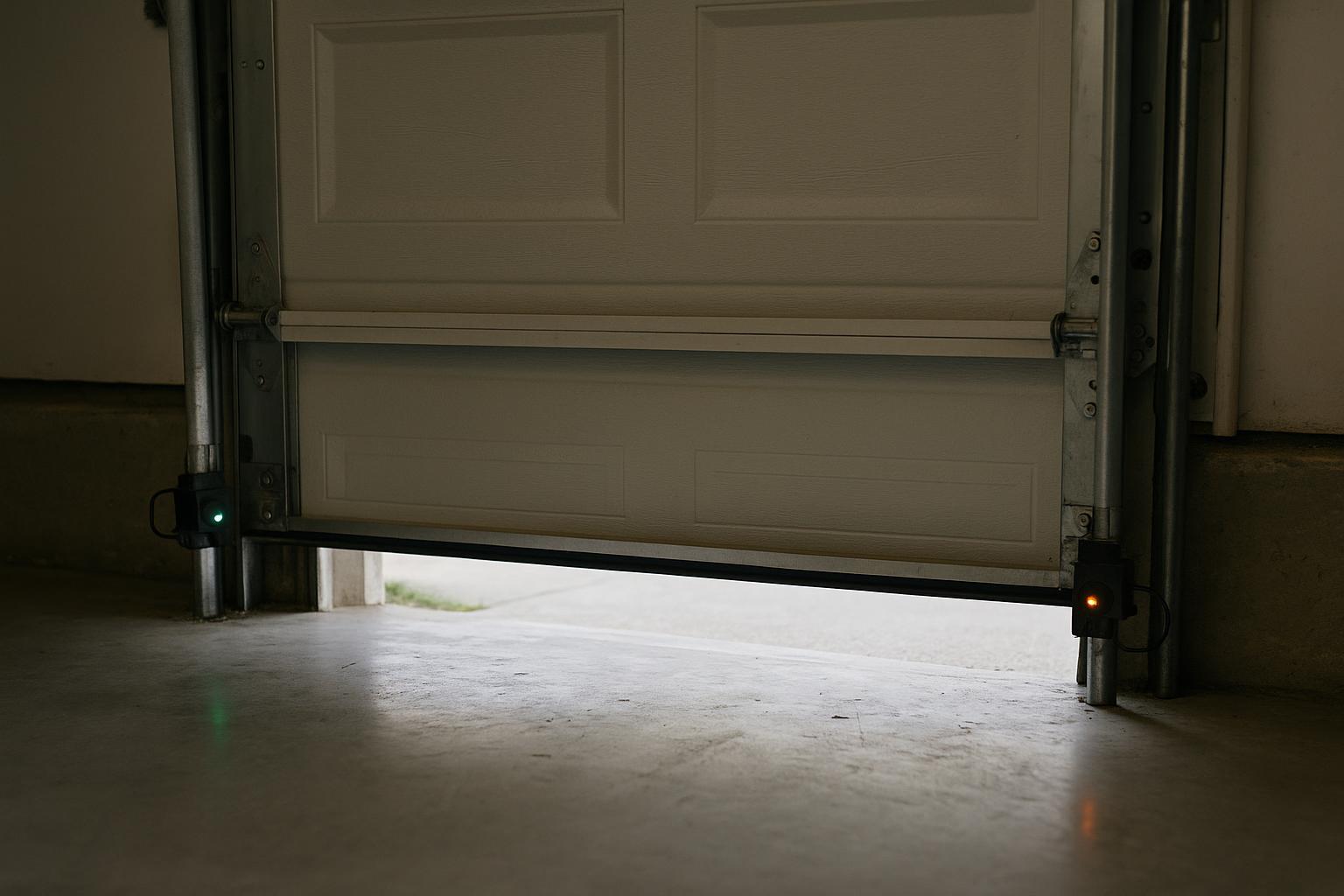
That Frustrating Reverse: What's Really Happening
You press the button on your garage door remote. The door starts its descent, everything seems normal — and then, just before it reaches the floor, it stops and reverses back up. You try again. Same thing. Maybe it works on the third attempt, maybe it doesn't.
This is one of the most common garage door complaints we hear from homeowners in Schenectady, and it's more than just an annoyance. A door that won't fully close is a security risk, an energy waste, and an open invitation for pests, rain, and cold air — especially during our brutal Capital Region winters.
The good news? This problem almost always has a logical, fixable cause. Let's walk through the most likely culprits so you can understand what's happening and decide whether it's a quick DIY check or a call to a professional.
1. Misaligned Safety Sensors
This is the number one reason garage doors reverse before closing, and it's the first thing any technician will check.
Every garage door opener manufactured after 1993 is required to have photo-eye safety sensors — two small devices mounted near the bottom of your door tracks, one on each side. They send an invisible infrared beam across the opening. If anything breaks that beam while the door is closing, the system assumes something is in the way and reverses the door to prevent injury or damage.
Here's the thing: these sensors don't know the difference between a child standing in the doorway and a sensor that's been bumped slightly out of alignment. If one sensor isn't pointing directly at the other, the beam is broken and the door won't close.
What to Check
- Look at the indicator lights on both sensors. Typically, one glows steady green and the other glows steady amber or green. If either light is blinking, that sensor likely needs realignment.
- Check for obstructions. Cobwebs, dirt, leaves, or even a small toy can block the beam. Wipe the sensor lenses with a clean cloth.
- Make sure the sensors are secure. They're mounted with small brackets that can loosen over time, especially if they've been bumped by a bike, lawnmower, or trash can.
Gently adjusting the sensors until both lights glow steady often solves the problem immediately. It's one of the simplest fixes in the garage door world.
2. The Close-Limit Switch Needs Adjustment
Your garage door opener has settings called limit switches that tell the motor exactly how far the door should travel when opening and closing. If the close-limit is set incorrectly, the opener thinks the door has hit the ground — or hit an obstruction — before it actually has. The safety mechanism kicks in and reverses the door.
This issue often appears after a new opener installation, a power outage, or when temperatures shift significantly. In Schenectady, the temperature swings between summer and winter can cause metal tracks and components to expand and contract just enough to throw off these settings.
Adjusting the limit switch usually involves turning a small screw on the opener unit itself. Your owner's manual will have specific instructions for your model. If you're not comfortable making this adjustment, it's a quick fix for a technician.
3. Damaged or Worn Rollers and Tracks
When rollers wear out or tracks become bent, the door encounters resistance as it moves. The opener's safety system interprets that resistance as an obstruction and reverses the door to prevent damage.
Walk along both tracks and look for:
- Visible dents, bends, or gaps in the track
- Rollers that are cracked, chipped, or no longer spinning freely
- Debris inside the tracks
Bent tracks and worn rollers are common in older Schenectady homes where the garage door system may not have been serviced in years. Replacing rollers is a relatively affordable repair that can make a dramatic difference in how smoothly and quietly your door operates.
4. Broken or Weakening Springs
Your garage door springs do the heavy lifting — literally. They counterbalance the weight of the door so the opener motor doesn't have to work as hard. When springs weaken or break, the door becomes significantly heavier for the opener to manage.
An opener struggling against a heavy door may trigger its force-sensing safety feature and reverse. You might also notice the door closing unevenly, moving slower than usual, or the motor straining louder than normal.
Important safety note: Garage door springs are under extreme tension and can cause serious injury if handled improperly. Spring replacement is not a DIY job. If you suspect a spring issue, call a professional.
5. The Opener's Force Setting Is Too Low
Similar to the limit switch, your opener has a force setting that determines how much resistance the motor will push through before reversing. If this setting is too sensitive, even minor friction from cold weather, a slightly sticky track, or aging weatherstripping can cause the door to reverse.
There's usually a force-adjustment screw on the opener unit. Increasing it slightly — in small increments — can solve the problem. But be careful: setting the force too high defeats the purpose of the safety feature. The door should reverse if it encounters a real obstruction. Finding the right balance matters.
6. Worn Weatherstripping Along the Bottom
The rubber seal along the bottom of your garage door can harden, crack, or become misshapen over time. When it does, it can create uneven contact with the garage floor, which the opener may interpret as resistance. This is especially common in our area where freezing temperatures cause rubber to stiffen and deteriorate faster.
Replacing the bottom weatherstrip is an inexpensive fix that also improves your garage's insulation and keeps water and pests out.
When to Call a Professional
Some of these issues — cleaning sensors, checking for obstructions, wiping down tracks — are perfectly reasonable for a handy homeowner to tackle. But if you've gone through the basics and the door is still reversing, or if you suspect spring damage, track misalignment, or opener motor problems, it's time to bring in someone who deals with these systems every day.
At Schenectady Garage Door Pro, we diagnose reversing doors regularly for homeowners across Schenectady, Niskayuna, Rotterdam, Scotia, Glenville, and Colonie. Most of the time, we can identify and fix the issue in a single visit. We'll also check the rest of your system while we're there to catch any other problems before they leave you stuck.
Don't Ignore a Reversing Door
It's tempting to just hold the wall button down to force the door closed or to leave it partially open. Neither is a good long-term solution. A garage door that won't close properly compromises your home's security, lets in weather and pests, and often signals a problem that will get worse — and more expensive — over time.
If your garage door keeps reversing and you can't pinpoint the cause, give us a call. We'll show up on time, figure out what's going on, and get your door working the way it should.